
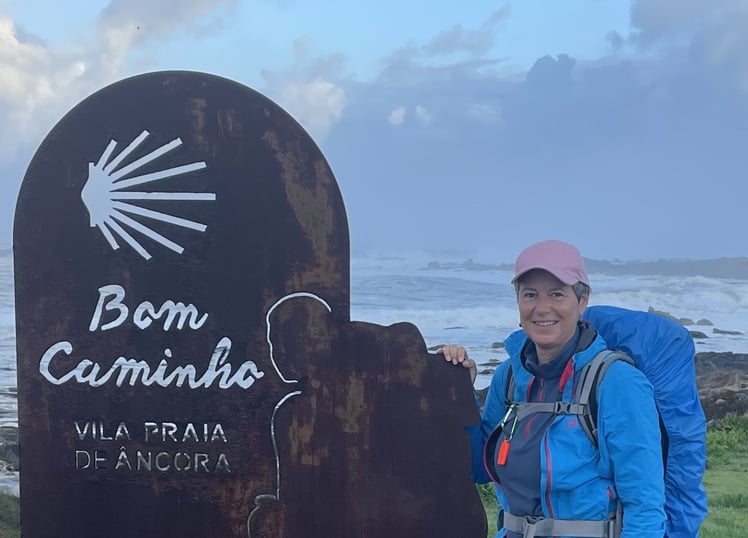
Lessons, Gear and Learnings from Hiking the Camino
There’s something about the Camino de Santiago that captures people’s interest. Maybe it’s the idea of walking hundreds of kilometres through small villages, mountains and countryside or maybe it’s the challenge itself. Or maybe it’s because everyone who has completed it seems to come home with stories that go beyond the physical journey.
That’s exactly why Ramakko’s has partnered with Rainbow Routes for Walk The Way: Stories & Strategies for Your Camino, featuring Monique Giroux. Having walked over 280 kilometres of the Camino Portugues and completed adventures everywhere from Mount Kilimanjaro to Machu Picchu, she’ll be sharing stories, lessons learned, practical advice and encouragement for anyone considering their own pilgrimage or long-distance trek.
The Camino Experience
Ahead of the presentation, we also caught up with one of our own team members, Ken, who completed the Camino and we asked him what he learned along the way. His experience reinforced something many Camino walkers discover: you don't need to have every detail perfectly figured out before you go.
One of the first surprises for many people? There isn't just one Camino route. There are twelve!
Our team member completed the French Camino, beginning in St. Jean Pied de Port, France, and walking roughly 800 km to Santiago, before continuing on to Fisterra and Muxia for another 125 km.
The route itself became part of the adventure.
"I don't spend much time planning when I travel — whatever happens, happens."
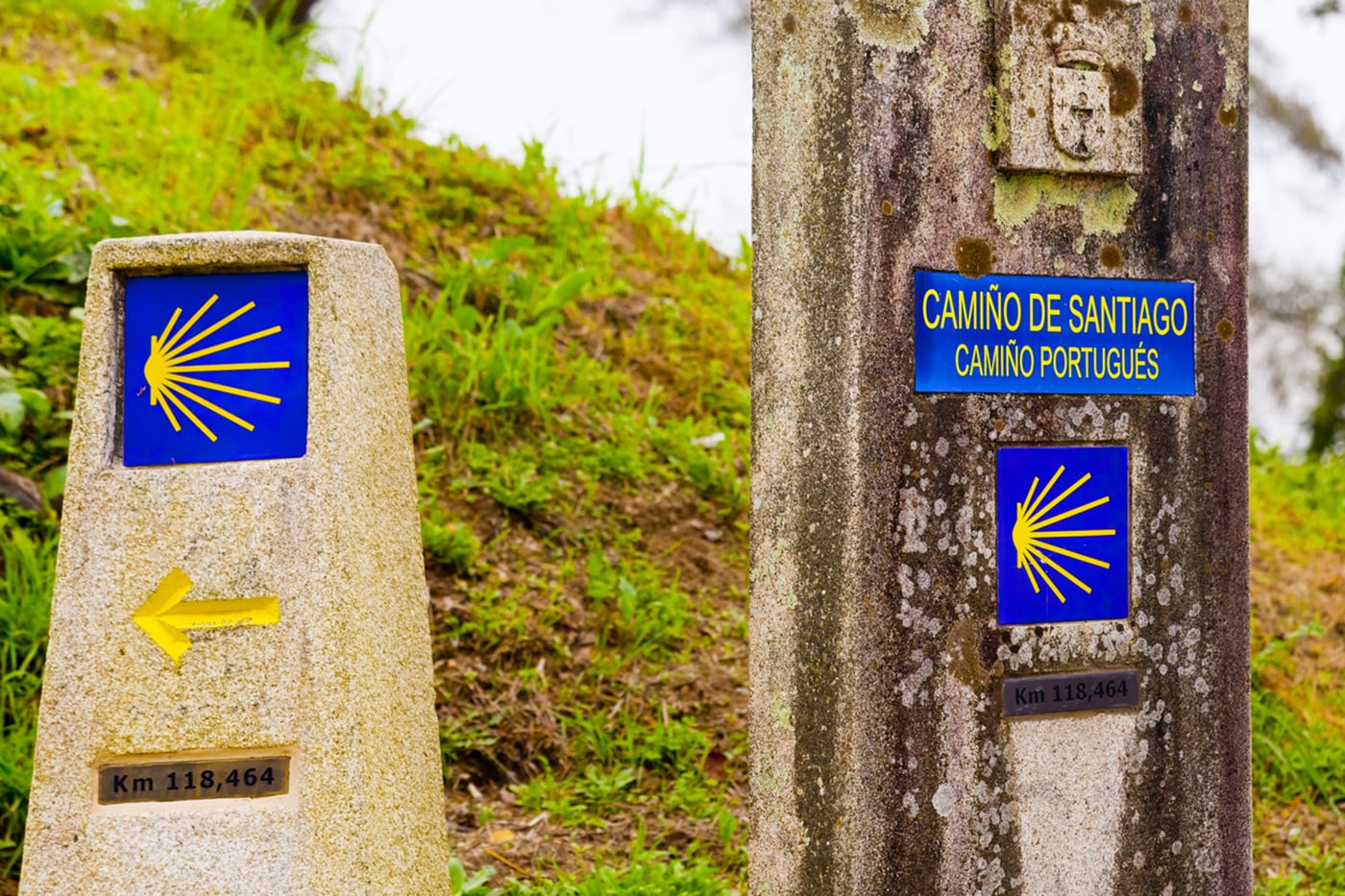
Unlike remote backcountry trips, the Camino offers regular access to food, accommodations, and supplies, meaning detailed planning isn't always necessary. The bigger challenge often becomes learning to trust yourself and adapt along the way.
Lightweight gear or Comfort?
Instead of obsessing over every possible detail, Ken focused on a few key things: weather conditions, terrain, and making sure food and accommodations would be accessible. Because the Camino passes through numerous towns and villages, many of the basics are available along the route. Rather than packing for every possible situation, he packed essential gear a day or two before leaving.
That approach also taught one of the biggest Camino lessons: you probably need far less than you think.
Backpacks
His entire six-week trip fit into a 35-litre carry-on backpack, and he carried everything himself rather than sending gear ahead. But even with a relatively light setup, he learned that weight isn't the only thing that matters. He would suggest a pack like the Osprey Stratos with 44L capacity and excellent suspension, allowing you to take along extra food and fluids or comfort items like a good inflatable pad and pillow.
"Lightweight gear and not bringing too much is important, but honestly, I wouldn't obsess over ultralight gear. Comfort is most important."
Footwear
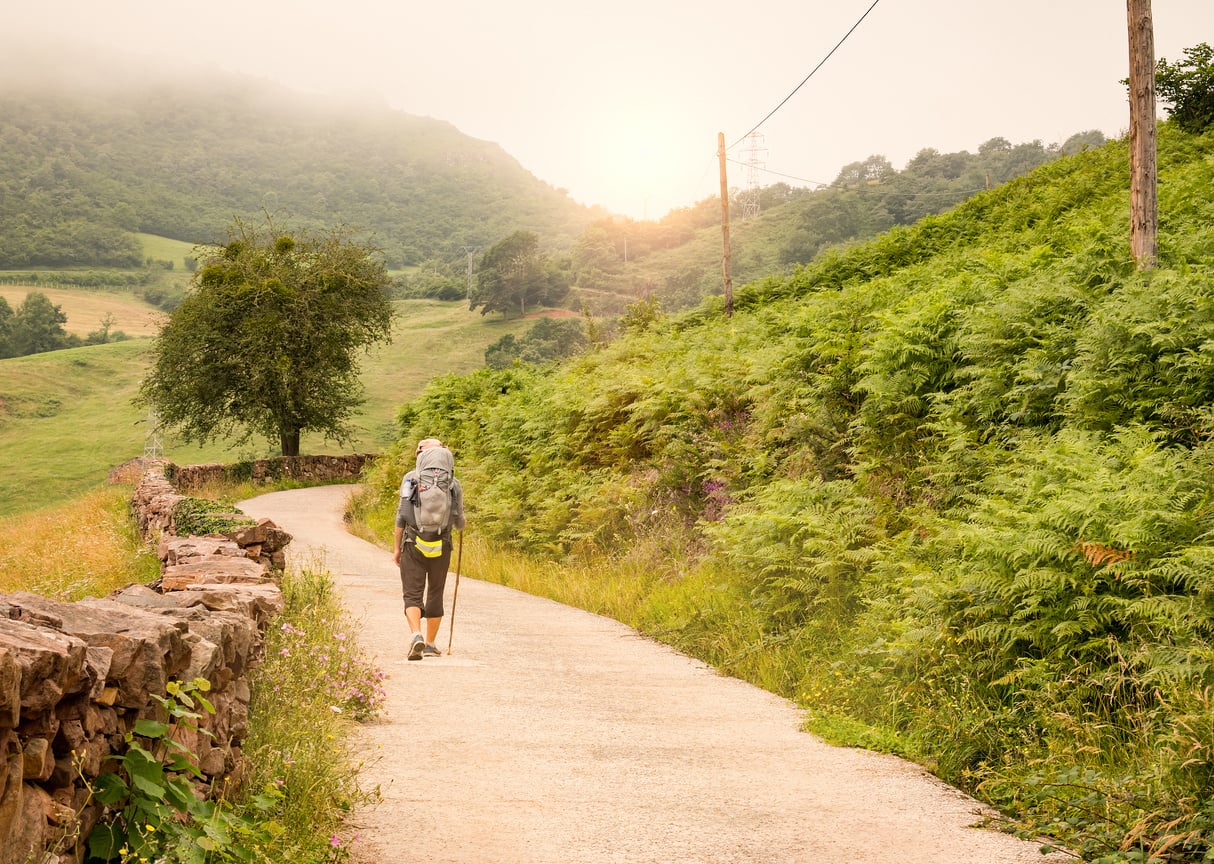
Footwear also quickly became one of the most important decisions he made. Over long distances, your feet become your entire world. Small issues become big problems, and comfort becomes priceless.
He also learned that waterproof footwear isn't always the answer. Wet shoes eventually dry, but hot and sweaty feet can create ongoing problems. Larger toe boxes, breathable materials and allowing room for foot swelling often matter more over long days of walking. Size up at least a ½ size to accommodate swelling and for more room for toes for the downhill.
For those attending the presentation and planning their own adventures, some of the footwear and gear being highlighted include options like the Keen Targhee IV Mid, Oboz Bridger Mid, Lowa Renegade EVO GTX, Salomon X-Ultra 360, and recovery footwear like slides or sandals for the end of the day.
Trekking Poles
"Definitely worth bringing," Ken said without hesitation.
Trekking poles help distribute weight, improve balance on uneven terrain, reduce strain on knees and provide support on long descents, which the Camino has plenty of. For something that many people debate packing, they quickly became one of those pieces of gear that proved their value day after day.
Typical Day
A typical day often started around 6:00 or 6:30 in the morning. There was coffee and usually a chocolate croissant before setting out for the day. Then came several hours of walking before stopping for lunch, followed by more walking toward the next destination. Evenings often involved checking into an albergue, showering, grabbing dinner and meeting other pilgrims before heading to bed around 10 p.m.
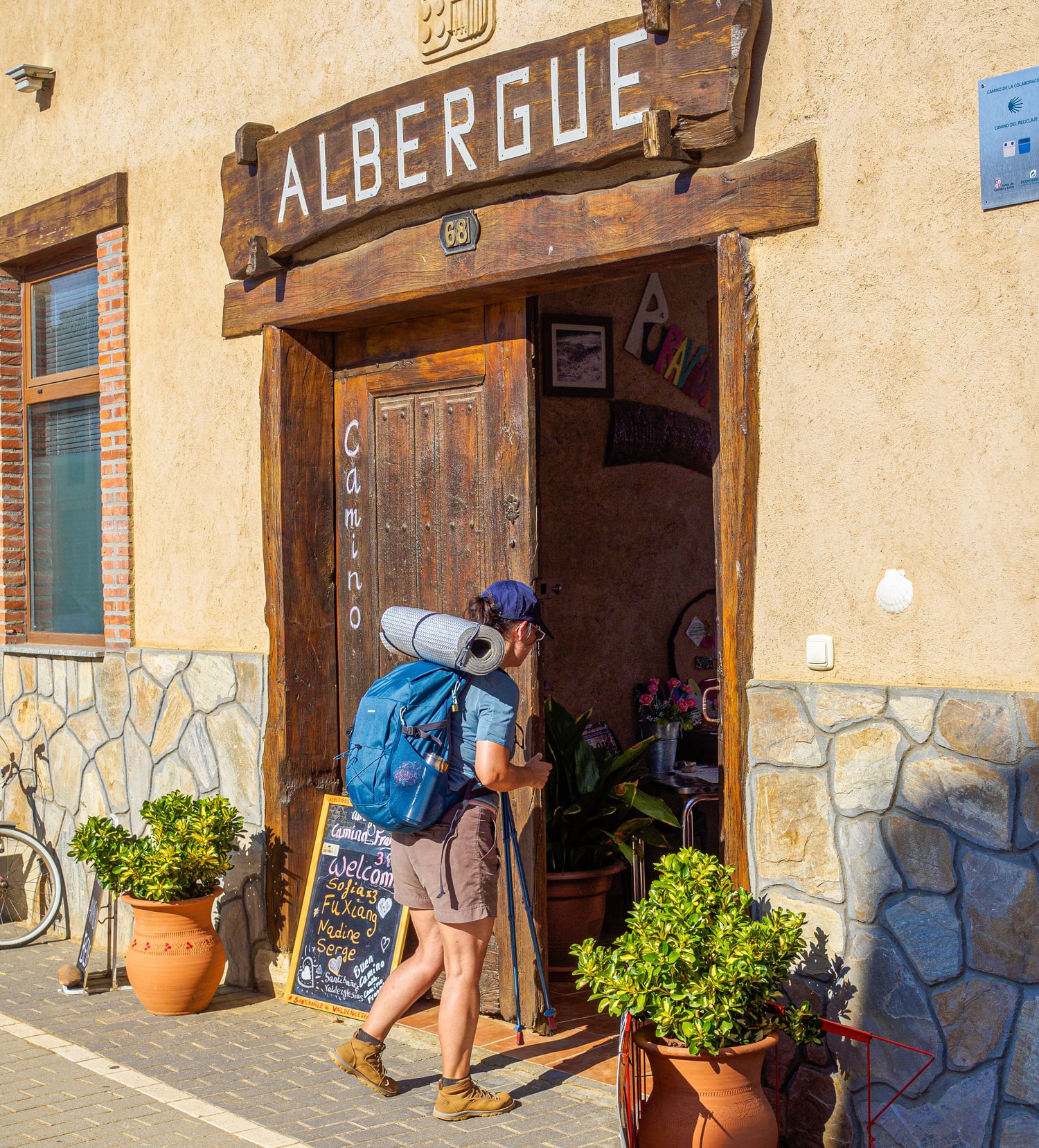
Most days involved anywhere from 35–45 kilometres of walking, repeated over and over again.
Somewhere in all that repetition, people often discover something unexpected.
The Biggest Lessons
Over the course of weeks on the trail, many people discover that the Camino becomes about much more than simply getting from one destination to another. While the physical challenge is certainly part of the experience, there is also something about the routine of walking each day that creates space for reflection. Long stretches of trail, simple daily routines, and conversations with fellow pilgrims often give people time to think in a way that everyday life rarely allows.
Many people begin the journey wondering whether they are prepared enough. They question whether they have the right gear, enough experience, or the physical ability to complete something that feels so ambitious. However, stories from the Camino often reveal that success rarely comes down to having every detail perfectly planned or feeling completely ready before you begin.
Many people discover that confidence and resilience are built along the way rather than before the journey starts. The lessons often come from the small moments — pushing through a difficult day, adapting when plans change, or realizing that you are capable of more than you originally thought.
You simply have to be willing to start. Take that first step and get planning your trek.
Q&A with KEN:
What surprised you most about the accommodations?
I have mentioned "albergues" prior to this. These are basically hostels for the "pilgrims"- those who are walking the Camino. For the most part this is where I stayed. They range in quality from crappy to excellent. They are run by the state, by private concerns and by religious orders. The price ranges from about $15-30 Cdn per night. Those run by religious orders are often called "donativos" and, obviously, give beds out for a donation - usually similar to what one pays for the other hostels. They are often only open from about May to November on the French Camino (there are numerous other Caminos but the French is the most popular).
They are usually rooms of 6-30 or 40 people and most have bunk beds. Most do not have heat and can get cool at night- fall in Northern Spain is often much cooler than the south although days can be hot. You receive disposable or freshly washed sheets and make your bed on arrival. Blankets are available but I suggest taking a sleeping bag or camping quilt. Nothing too extreme unless you plan on sleeping out. Although there is rarely heat the rooms are often full and get quite warm especially in the top bunks. Bed bugs were not a concern and I did not meet anybody who had experienced them. Theft was also almost unheard of. I did keep my money, cards and passport with me but left my pack and other belongings unattended while out on the town or elsewhere in the hostel.
Showers are available but can get busy as the evening progresses. I usually tried to end my day by 5 or 6 and showered directly after checking in and making my bed.
So, what surprised me about the accommodations were that for the most part they were relatively clean and safe. Occasionally, there are some bad Albergues but most have ratings when listed on Camino Ninja or one of the other Camino apps. Also, most are easy to book using WhatsApp if beds are available. If you can book ahead a few days or even in that morning that is the best idea. Donativos and some of the private albergues do have curfews.
What was the food experience like?
The food is available in all ranges. Some villages have one or no restaurants. The food served at albergues for an extra 5 or 10 euros is usually nutritious or basic. Grocery stores are frequent but not in every village and may be closed for siesta in the afternoon, at 6 o'clock and/or on Sundays.
I usually had basic food from the grocery store with me to snack on along the way. If you're money allows or if you find a well priced local restaurant I recommend eating at a local restaurant. The food is fantastic. A favourite of mine was the tortillas- more like a thick egg omelet with different ingredients. I enjoyed eating these at lunch. And although inland, fish is often available and excellent.
Most walking days end from 4-6 pm so there is time to explore, have a good meal, wind down. Again, any of the Camino apps are very helpful regarding what is available for food at different stops. Also the wine of different regions should be sampled.
How did you handle laundry, recovery, and rest days?
A lot of albergues had hand laundry washing and some machine washing for 4 or 5 Euros. I used the hand washing and if not available I'd wash clothes in the shower and hang on my bed end or outside when possible. If clothes were still damp in the morning I'd hang them on the outside of my pack to dry while walking.
I did not take any rest days until I got to Fisterra. I did take a few short distance days.
Regarding recovery it started with a good night's sleep and a preventative routine each morning before walking. Tylenol if needed. Trail Toes cream to feet and dry socks. Voltaren cream to feet when needed (most days). For the one blister I had on my toenail I used Leokotape.
I cannot talk highly enough about Trail Toes cream and Leukotape. Two musts in my opinion.
What was your favourite town or stretch of trail?
Lots of beautiful areas. I really enjoyed coming into Pamplona and walking around the old town. I ran the bulls there back in the 80s and I haven't been back there since so a lot of good memories.
Have to say my favourite stretch was from Cee to Fisterra and overall Fisterra was my favourite place. There are not many water bodies along the way which I missed. So, when you come over the hill going down to a large town call Cee which is on the Atlantic Ocean it's a real boost. The next main town is Fisterra which is the furthest point west in Spain and a rugged beautiful town on the ocean. Definitely my favourite place.
What was the hardest part both physically and mentally?
The climb in the Pyrenees is pretty hard and the way from Roncesvalles to Zubiri is very treacherous downhill jagged rock for a number of kilometers. There is a lot of steep upside and downs. I did develop hiker's knee a week or two into the walk from the pounding of quick descents. I thought I might have to take a few days off but managed it by shortening my stride when going down steep descents. Knee issue resolved and did not return.
Downhills caused a lot of walkers big problems. Not only knee or ankle problems but horrible blisters and loss of toenails from toes hitting the front of hard tight toe boxes. I saw more than one pair of expensive hiking shoes with the toe cap cut off. Get shoes with a roomy toe box and a 1/2 to 1 full size larger than usual- your feet will swell.
Having said that, the hardest stretches of the walk for me were the climb from Las Herrerías to O Cebreiro- very steep muddy sections. And the Liñares to Samos stretch. This is about a 28 km stretch in up and down Highlands. However, the day I walked it was at the height of Huricane Kirk. I have never seen winds or rain like that. Even with a good rain poncho and packsack raincover everything I owned was soaked. I recommend taking a packsack liner or plastic bag for keeping gear dry in heavy rain situations.
Mentally I'd say the toughest part is facing the distance of the walk. I broke it down into smaller chunks and distances to complete.
Was language ever a barrier?
I know some very rudimentary Spanish so this helped. In smaller villages it was less frequent to meet people who spoke English. But, the Camino Frances is the most popular Camino with tens of thousands people walking it yearly so a lot of services have people who can speak some English. Overall, even in situations where there is no common language you can still make yourself understood regarding basics.
What advice would you give someone doing their first Camino?
- You don't have to do the whole thing at once - it can be broken up into sections that can be done over the course of several years. Realistically, I would say do 20-30 km per day. The whole trip might take longer but it will be more manageable. Most people who are in at least fair shape can complete this. Also, shorter days will allow you to see and experience more of the towns and recuperate easier.
- Before going, contact the Canadian Camino association. You can get the passbook needed for stamps from them prior to going. It can take a fair amount of time organizing this in St. Jean.
- Get a comfortable pack and comfortable quick drying clothes and shoes.
- Stay in places that you feel comfortable in. Albergues might not be your thing. Depending on your finances the range of places to stay is everything from camping out to 5 star hotels.
Gear List Highlighted in Presentation
Footwear: (Hiking and Recovery)
Keen Targhee IV mid
Oboz Bridger mid
Lowa Renegade EVO GTX
Newport H2
Salomon X- Ultra 360
Birks and North Face Slides – for shower + recovery
Clothing (Layers, Convertible and Merino)
Mid Weight Fleece
Rab Nexus Zip Up
Patagonia
Mac in a Sac Poncho
Mac in a Sac Down Jacket
Icebreaker base layers
Icebreaker and Smartwool Tops
OR Ferrosi Convertible Pants
Columbia Tech Trail Pants
Columbia or Patagonia Quick Dry Shorts
Backpacks:
Gregory, Osprey and Rab
Rain Covers
Essentials:
Camp Suds
Telescopic Poles: Leki and CAMP
Quick Dry Towels: Pack Towel and Nomadix
Locks, Toiletry Bag, Lockable Purse, Travel On
Sleeping Bag Liner – Sea to Summit
Hydration and Filtration: Aqua Tabs, Katadyn Befree 1L, Lifestraw
1.5 Osprey Bladder
Dry Bag + Dry Compression Bag – Sea to Summit
Head Lamp: Petz and Black Diamand


